My Photo Collection

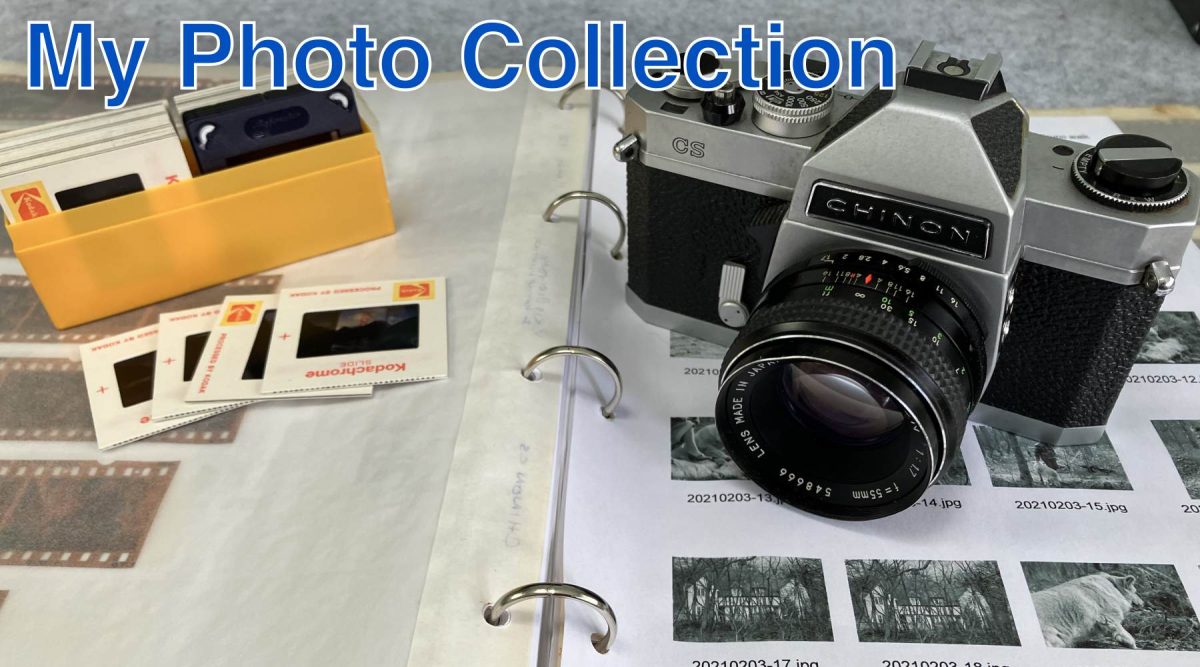
Like many people of my age I have a collection of thousands of photographs. These go back to my first photos from the 1960s and even further with albums of family photos stretching back to the early years of the 20th century. In the 1970s and 80s the number of pictures I was taking increased dramatically with colour and black & white negatives, mounted slides and of course many prints.

Moving on to 1999 and I was using my first digital camera so again the number of photos increases. At about the same time I bought a film scanner so many of the old negatives and slides were converted to digital. 

And now here I am with tens of thousands of pictures in many different formats wondering whether I can catalogue them in such a way that I can find the ones I want to look at. This was actually the reason why I bought my first Mac computer back in 2007 as it came with iPhoto which seemed to be the perfect solution. Eventually this was changed to the current Photos app, annoyingly just after I had decided to buy Aperture which was discontinued by Apple and which does not run any more.

Apple iCloud Photos is very good and it does give me access to much of my collection. But it was never the best thing for RAW files from my newer cameras or for the TIFF scans of negatives and slides. I wanted something that could look after all of these things or at least could help deal with larger files than a cloud-based solution. Really I wanted to be able to see the actual files rather than have them hidden inside Apple Photos.

Lightroom was one piece of software which seemed to have all the answers. The subscription was a drawback but maybe I could live with it. And Lightroom is very easy to use too. But then they started adding in all the fancy AI features but didn’t change the organisation side of the program very much. 

Then there were other issues. Lightroom runs on Mac or Windows but only on the latest versions (or two older versions). Yes, I could run an older edition on outdated operating systems but then it seemed a waste to pay the full subscription price with no new features. But worse still is the amount of computer resources it needs. The memory requirement is huge especially when I add up all the additional processes from the required Adobe Creative Cloud app. When thinking about what computers I need I found myself having to look at more expensive ones just to be able to run Adobe software. Altogether I had a love/hate relationship with Lightroom.

After trying to find a way to make Apple Photos work for me I had a brief go at using Acdsee but that never really worked the way I needed. I wanted something which did not lock me in and which ideally could run on Linux if needed since I have old computers which could be used. 

Looking at open source software for managing and processing photo collections has been interesting. I tried Darktable without much success. With practice I am sure I could use it to process photos but as a management tool it is poor, especially as it cannot catalogue video clips. Rawtherapee proved to be a very approachable RAW editor but again not something suited to cataloguing. But Digikam seemed to be just what I need, until I realised that it’s built in editor is somewhat eccentric.

Where does that leave me now? On my desktop Mac today I have many different software apps but the ones I use most are a combination of Digikam for cataloguing and Rawtherapee for editing both RAW files and for inverting negatives. I tried SILYPIX but it was just too slow and Rawtherapee could do just as well. Apple Photos is still in use as my show and share app.
Discovering SILKYPIX

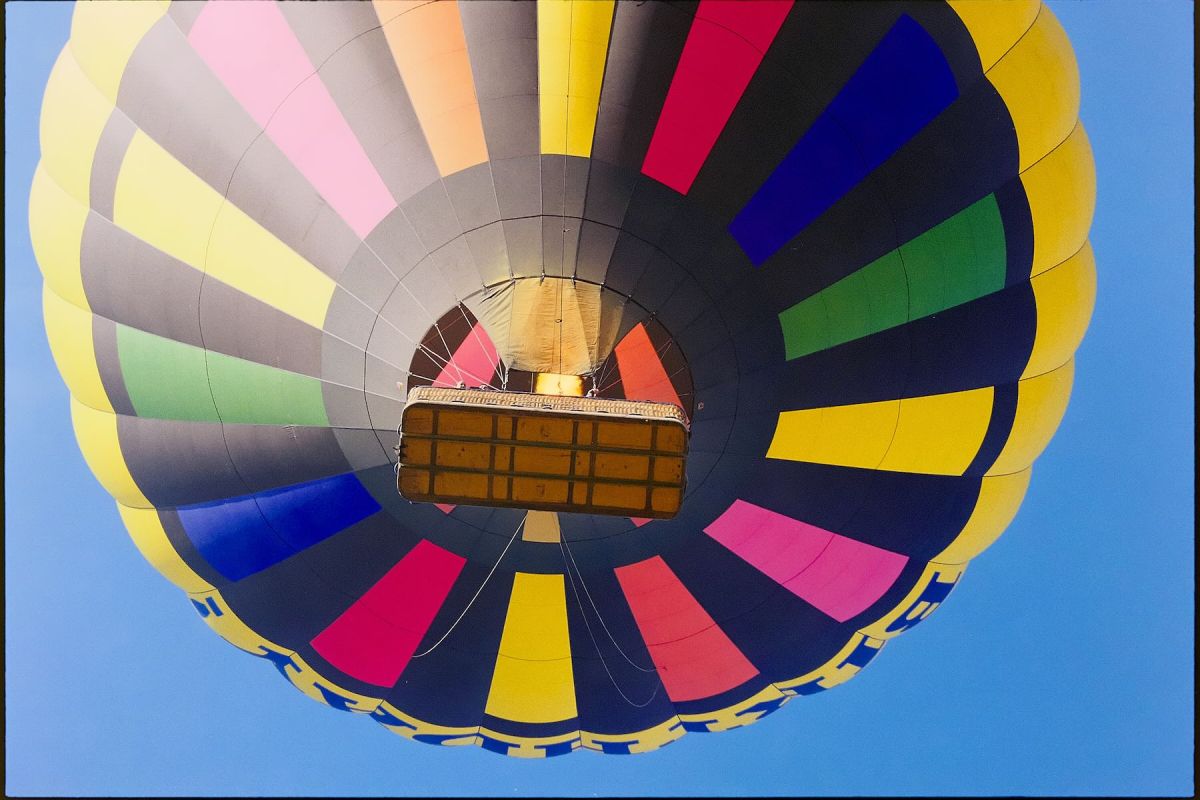
Balloon shot on Kodak Gold

It has been quite a while since my last post but in that time I have been trying to find the “ideal” software for processing and cataloguing photos. There is no such thing of course but it is fun trying out different combinations. My latest discovery is SILKYPIX (yes it is written in capitals).

Anyone who has a Panasonic Lumix camera will be offered a cut-down version of SILKYPIX for free to develop RAW photos. This works surprisingly well and after some experimentation I found it quite easy to use. One of the benefits is that it offers the same style presets which are built into Lumix cameras. I also found that it rendered colours much better than other RAW editors, especially greens. This software comes from Japan and has a different feel to other RAW editors.

After trying the free version, which is really an older edition of the software, I decided to trial the latest SILKYPIX Developer Studio Pro 11. This version has some new features and feels a bit faster but one feature really was exciting to try. SILKYPIX can invert camera scans of negative film images. I tried it out on a set of camera scans of a KODAK Gold film. The picture above is one of the resulting inversions.

In the past I have tried Negative Lab Pro, Filmlab, Darktable and Vuescan for inverting camera scans. They all work but also have some eccentricities. I found using SILKYPIX surprisingly easy and the test image of the balloon shows how effective it can be.

I will continue using SILKYPIX for Lumix camera RAW files and for negative inversion, it seems like a good tool to add to my collection. The only downside is that the Mac version must run on Rosetta and the company seems undecided about whether to produce a new version for Apple Silicon.

A New Old Scanner

A New Old Scanner

“Wow! Those look really good!” These were my first reactions on seeing scans from my recently received acquisition. It really wasn’t the most exciting thing ever but it did come from seeing my new scanner work for the first time.

I did have two scanners, an Epson Perfection 4490 flatbed and a Plustek 8200i film scanner. In principle the Plustek was used for 35 mm film while the Epson is for medium format and for scanning photo prints. Though both have been working perfectly I just was not satisfied with them. The problem is 35 mm negatives, the Epson scans are just too soft and often give the dreaded moire patterns, the Plustek seems to be very good but I was noticing every little mark on the film, dust spots yes but also very small gaps in the emulsion and all sorts of scrapes and scratches. At times it looked as if the Plustek was showing individual film grains.

Other people seemed to be obtaining scans on higher resolution devices without all these niggling marks. Lab scans in particular don’t have marks like this and I just cannot believe they were all Photoshopped out before being sent to me. Using infra-red dust removal wasn’t doing the trick either which left tedious spotting or else resorting to the dust and scratch removal filter in Photoshop or Affinity Photo.

To make matter worse many of my old negatives show signs of fungal infestation. This leaves hundreds of little tracks through the emulsion. Scanned with the Epson these just don’t show but with the Plustek every little mark is there.

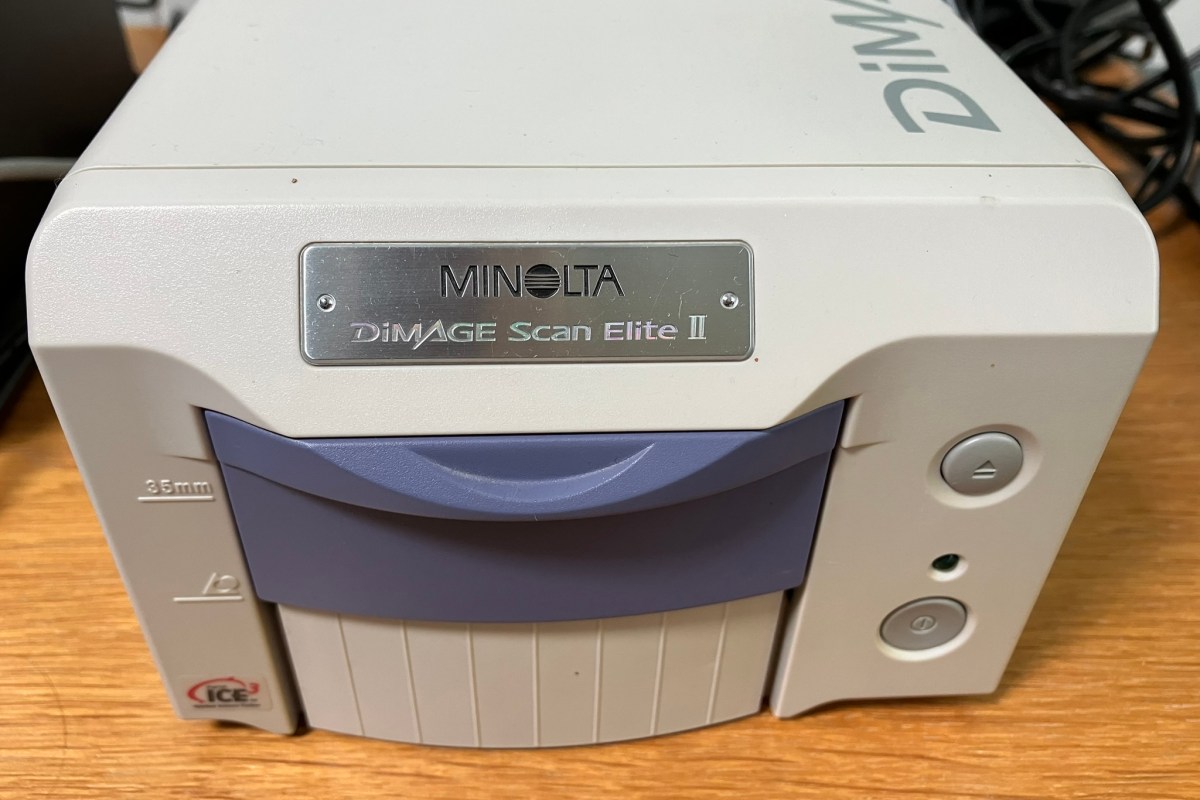
Watching YouTube I noticed someone else was having the same issue but compared this to the higher resolution Nikon Coolscan device he just happened to have. He suggested that the light source in his Nikon was more diffuse and so gave a more pleasing image. That night, well about 4 am really, I looked through Ebay for alternatives and found the many variants of Minolta scanners. By 5 am I had bought a Minolta Dimage Scan Elite II.

So, back to those reactions to the first scans. They are sharp and have excellent contrast but show fewer marks than the Plustek. Resolution is just 2820 dpi but this is about perfect for my use resulting in images between 10 and 11 megapixels. The only problem is that the device is very slow connected by USB since it uses the original 12 Mbps type. Back to Ebay and I have ordered a Firewire card to fit into the spare slot in my computer.